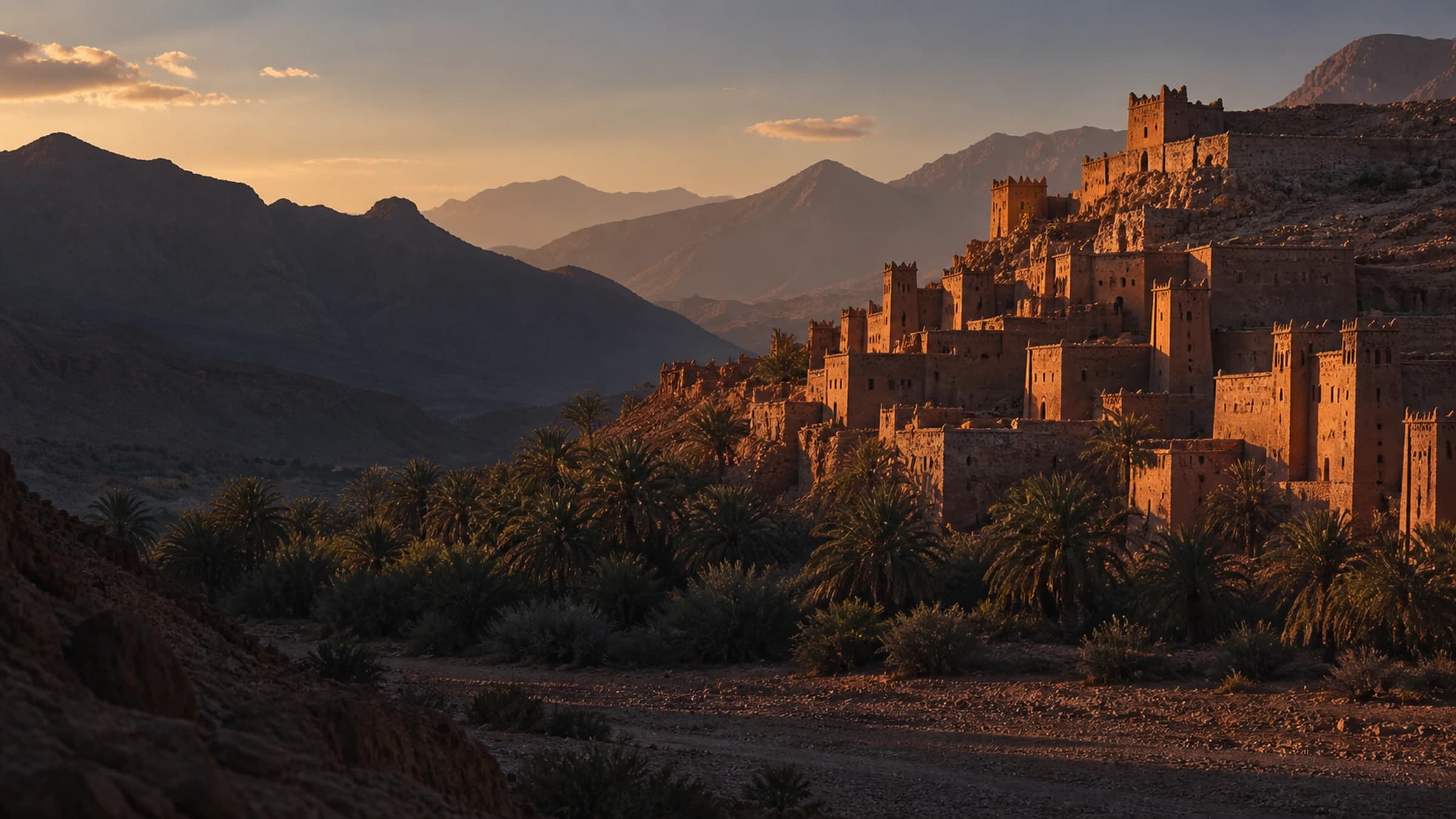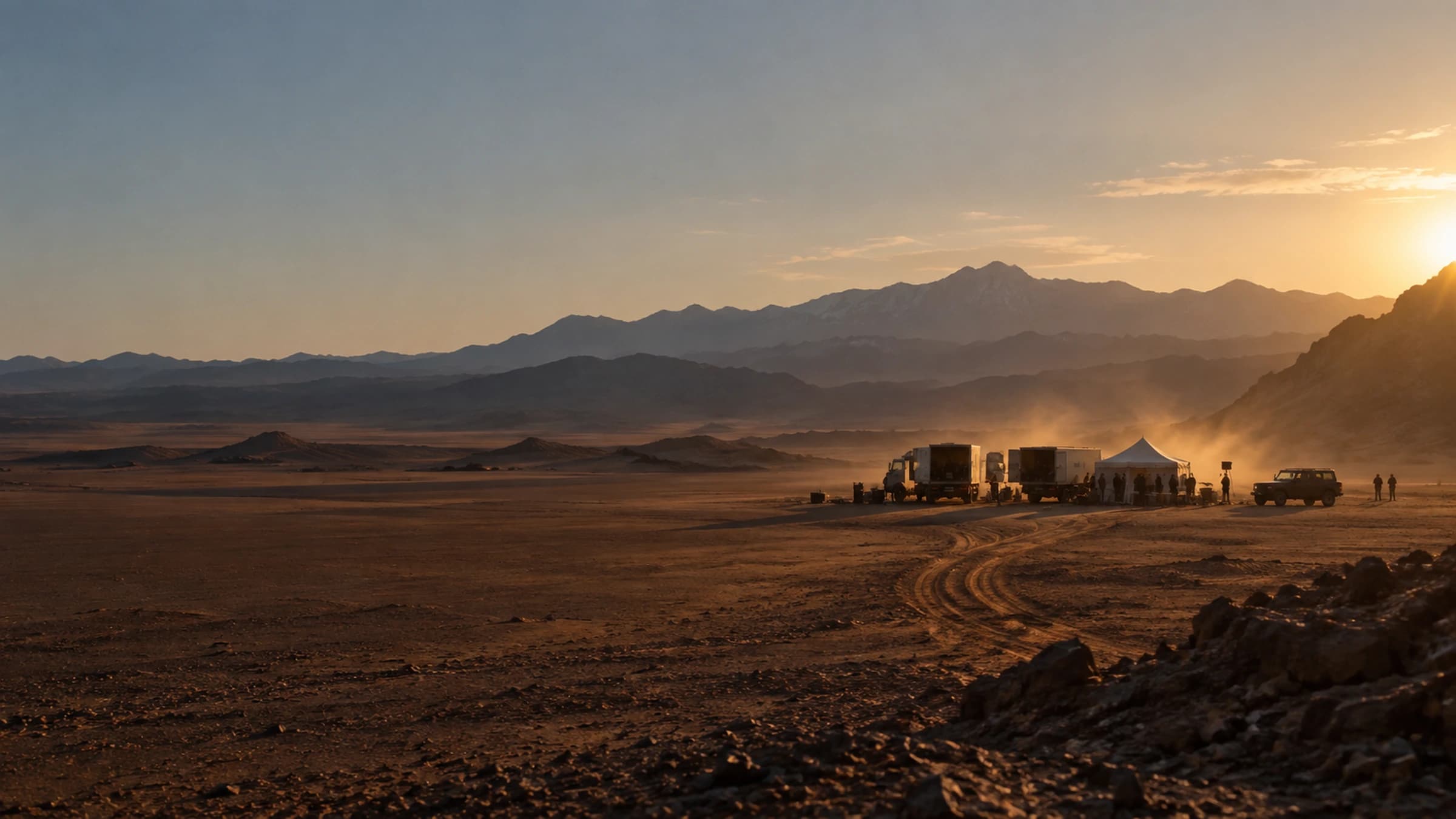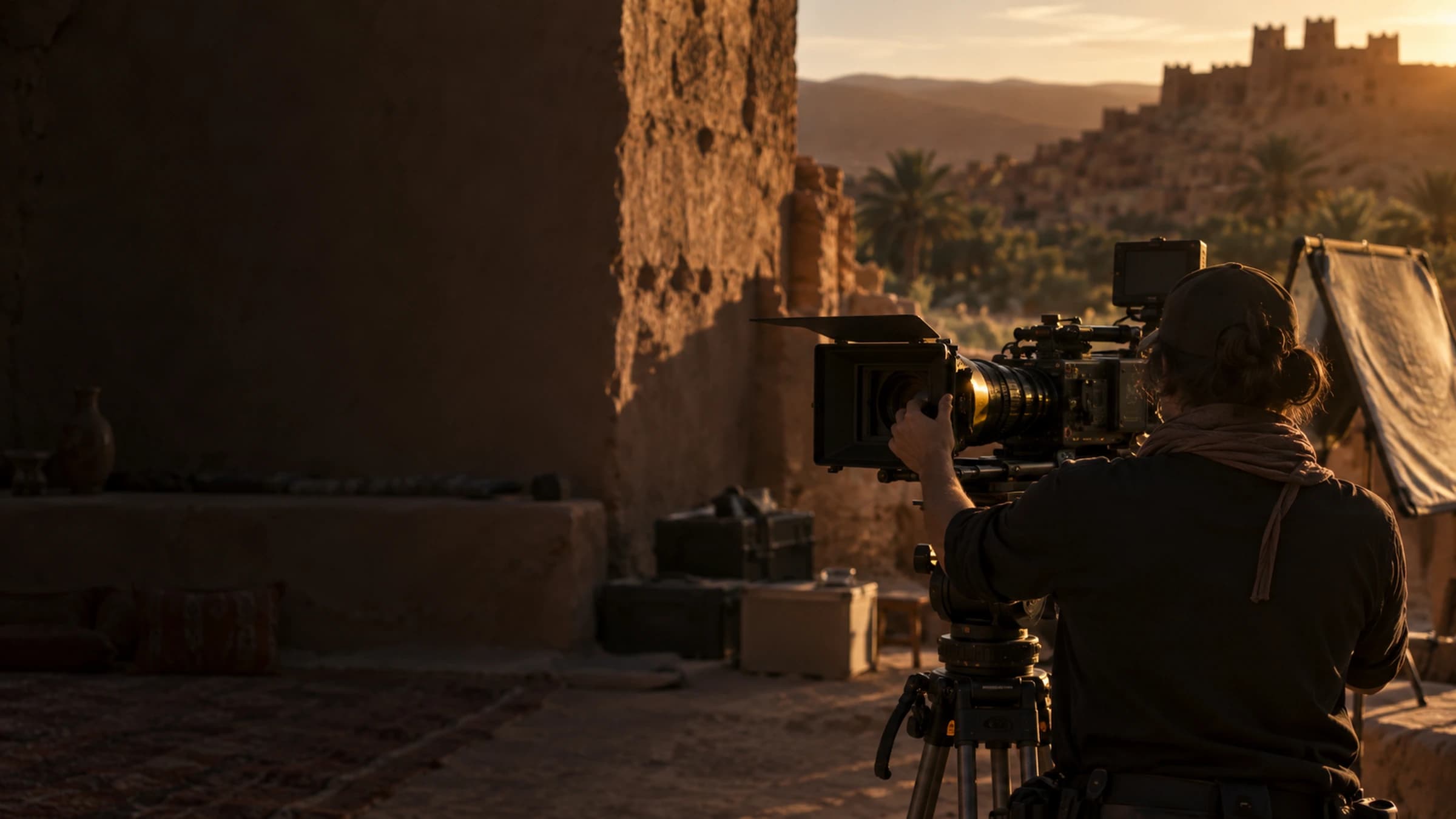
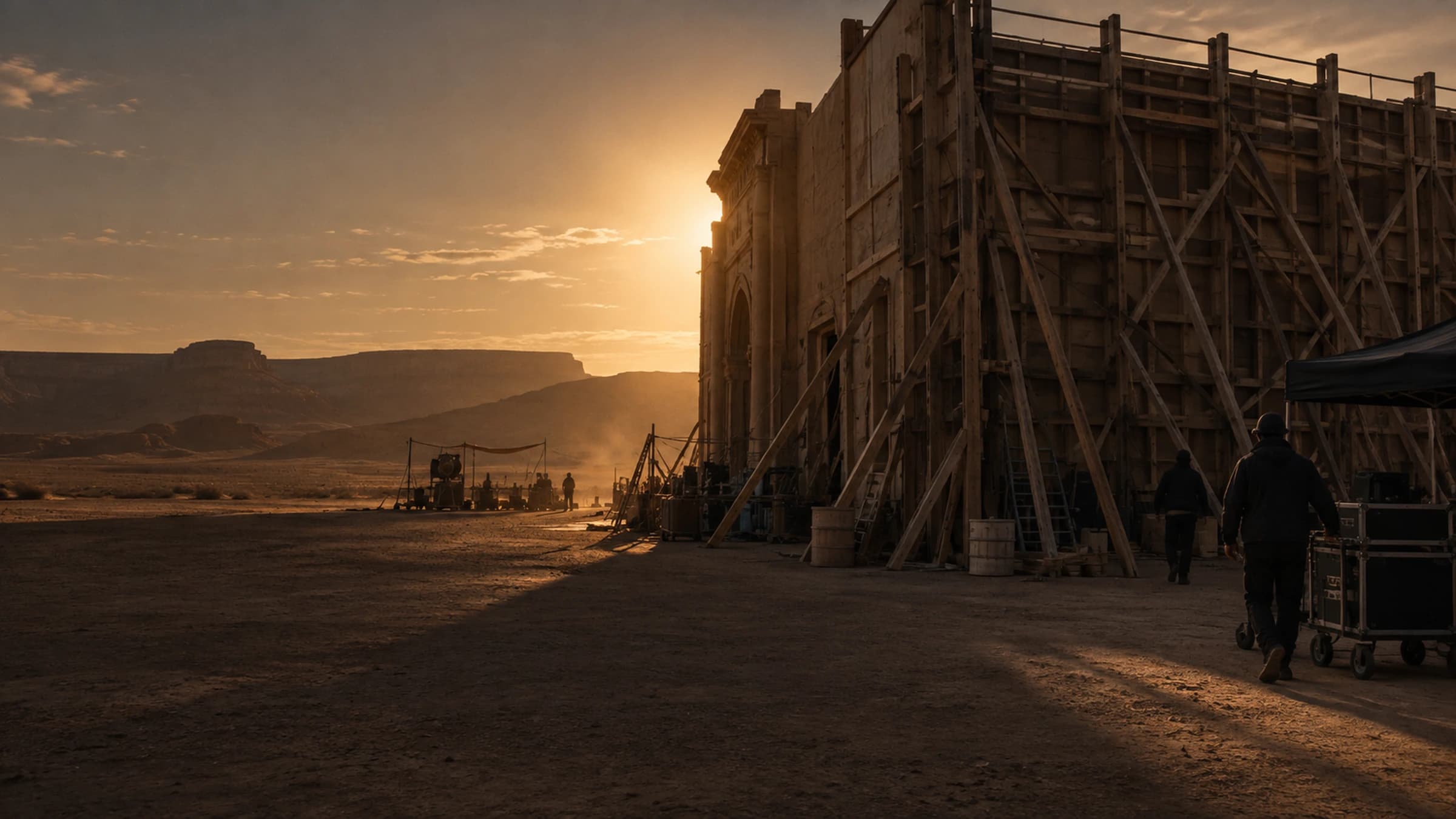
Ouarzazate is not a shooting town because it is photogenic; Morocco is not short of landscapes. It is one because it has studios, and because those studios sit a few kilometres from natural locations that other territories would have to build from scratch.
The Centre cinématographique marocain (CCM) lists several studios there: Atlas, CLA, Kan Zamane, Cinedina and Ester Andromeda. The Moroccan business press counted four in operation in early 2024: CLA, Atlas, Studio Oasis and Studio Kan Zamane.
Atlas Studios
The oldest of the Ouarzazate studios opened in 1983. It occupies some twenty hectares, about four kilometres from the town, and is distinguished by its permanent Egyptian and pharaonic standing sets.
Productions shot there include Kundun by Martin Scorsese in 1997, Gladiator by Ridley Scott in 2000, Astérix et Obélix : Mission Cléopâtre in 2002 and Prince of Persia in 2010. The site is now also open to visitors and to events.
CLA Studios
CLA Studios came out of a 2004 deal bringing together Dino De Laurentiis, Cinecittà and the Moroccan group Sanam Holding, and was inaugurated in January 2005 in the presence of King Mohammed VI. The CCM lists it under the name Cinecittà studio.
The sources disagree on its surface area: the press at the time of the opening referred to around 150 hectares, while the recent Moroccan press speaks of 160 hectares. The order of magnitude is not in dispute: it is the largest site in Ouarzazate, some ten kilometres from the centre, with two sound stages, workshops and standing sets.
Kingdom of Heaven shot there, and the second season of The Wheel of Time worked there in 2022, both on the stages and in the surrounding locations.
Oasis and Kan Zamane
The producer Khadija Alami opened Oasis Studios near the Fint oasis, some fifteen kilometres from the centre of Ouarzazate, in 2017. Kan Zamane completes the roster listed by the CCM.
This plurality matters more than it appears: it allows several productions to work in the region at the same time without competing for the same stages, and gives the executive producer real negotiating room.
The International Cinema City
Work on an International Cinema City (Cité internationale du cinéma) was launched in Ouarzazate at the end of June 2026. The project carries a budget of 240 million dirhams, around 25 million dollars, for an announced construction period of 36 months.
The complex is to cover 10.49 hectares at the main entrance to the town, with direct access to national road 9, and to be organised into five clusters.
- A production cluster, including a 3,000 m² stage.
- A post-production and archiving cluster.
- A training cluster.
- A cluster dedicated to innovation and creative technologies.
- A hospitality, hotel and film tourism cluster.
For a foreign production, the salient point is not the stage but the post-production and training clusters. A territory that only shoots exports its added value; a territory that post-produces and trains keeps its technicians, and it is the availability of technicians that decides the real cost of a shoot.
Shooting conditions
Climate is a production parameter. On the Gladiator II shoot in Ouarzazate, from June 2023, temperatures regularly reached 35 °C. A summer schedule in the region is built around that constraint, not in spite of it: shifted call times, crew protection, and care of rammed-earth sets.
The CCM also highlights the existence of landing strips in desert areas, in addition to airports and the motorway network, a factor that weighs on moving heavy equipment to remote locations.
In practice
Ouarzazate is chosen for one simple reason: the proximity of covered stages, construction workshops and natural locations. It is prepared for another: heat, distance and logistics. Both are handled on the recce, with an executive producer who knows the real availability of the stages in the period being targeted.